CULTIVATED MEAT CONSORTIUM

CULTIVATED MEAT CONSORTIUM WELCOMES YOU
The Cultivated Meat Consortium is a group of Israeli companies and Academy, developing Cultivated Meat Technologies, powered by the Israeli Innovation Authority IIA


About
The establishment of the consortium was led by Good Food Institute Israel (GFI) grantee, Gaya Savyon, the consortium technical manager and Tnuva Group, the largest Israeli food manufacturer, who also heads the consortium.
We are dedicated to advancing the technologies involved in the production of cultured meat. Our vision is to create next-generation cultivated meat products that are of higher quality and complexity and can be produced at costs comparable to traditional animal meat, making the cultured meat industry a viable alternative to the current meat industry. The consortium's activities will also help establish Israel as a leader in this emerging field. Specifically, the consortium aims to address key challenges in the production of cultured meat, such as establishing optimal source cell lines, developing scalable, efficient, and cost-effective methods for cell differentiation, developing serum-free growth medium and reducing its production costs, creating scaffolds for meat growth, and scaling up methods using Macro Single Use Bioreactors (MSUBs).
Collaboration
The Israeli Cultivated Meat Consortium is a collaborative effort between academic institutions, large companies, and startups aimed at advancing the field of cultured meat. The consortium includes academic institutions, as well as companies such as Aleph Farms, Tnuva, Sartorius, and SuperMeat.
Through the consortium, these organizations can share resources, knowledge, and expertise to accelerate the development of cultured meat technology. Academic researchers contribute their scientific expertise and access to cutting-edge technology, while startups and large companies bring industry-specific knowledge and commercialization capabilities.
The collaboration also allows for the pooling of resources and funding, which can be used to support joint research projects and the development of shared infrastructure. This helps to lower costs and speed up the time it takes to bring cultured meat products to market.
Overall, the constructive collaboration between academia, big companies, and startups in the Israeli Cultivated Meat Consortium is a great example of how different types of organizations can work together to advance an emerging technology and create a more sustainable and ethical food system.

Research Activity
At the Cultivated Meat Consortium, we believe that collaboration between industry and academia is crucial to advancing the technologies involved in the production of cultured meat. That's why we have established four work packages that bring together scientists from Israel's leading academic institutions and experts from the industry's top companies.
Through our work packages, we are making significant strides in advancing the cultured meat industry, and we are proud to be at the forefront of this exciting and developing field. Stay tuned to our website for updates on our progress and to learn more about our research and developments.

Cell Lines
Our first work package focuses on establishing optimal source cell lines for the production of cultured meat. This involves researching and identifying the best cells for meat growth, so that we can create meat products that are both tasty and sustainable.
Work Package Leader:
Dr. Iftach Nachman, Biochemistry Molecular Biology, Faculty of Life Sciences, Tel Aviv University.

Growth Medium
The second work package is dedicated to developing serum-free growth medium and its most important components, the growth factors, and, reducing its production costs. This is crucial to making cultured meat production more affordable and sustainable.
Work Package Leader:

Scaffolds
The scaffolds development work package aims to create and optimize the structures that support the growth and differentiation of muscle and fat cells in lab-grown meat. This includes researching and testing various materials and designs for scaffolds.
Work Package Leader:
Dr. Ella Sklan, VP, Biological Applications, Seevix Material Sciences

Scale Up
Finally, in our fourth work package, we develop used medium recycle technologies. We are also scaling up methods using Macro Single Use Bioreactors (MSUBs) as well as conventional bioreactors. This will help us produce cultured meat products on a larger scale, and enable us to bring these products to market at a competitive price.
Work Package Leader:
Doron Maor CTO Innovation, Tnuva Corporate.
Consortium Members
Eleven companies make up the Cultivated Meat Consortium's industrial members, united by their common goal of promoting the growth and advancement of cultured meat production and development. Additionally, the consortium draws on the knowledge and capabilities of eleven renowned research groups from five top Israeli research institutions. The Good Food Institute serves as the consortium observer, while funding is provided by the IIA.
Consortium Chair

Cultured Meat Development Companies


Media and Growth Factor Development Companies


Scaffolds Development
Bioreactors and Manufacturing Technologies Development Companies


Academic Institutes


Observer

The Cultivated Meat Consortium is supported with research and development grants from the Israel Innovation Authority (IIA) and it operates under the Magnet Consortium track.



Team
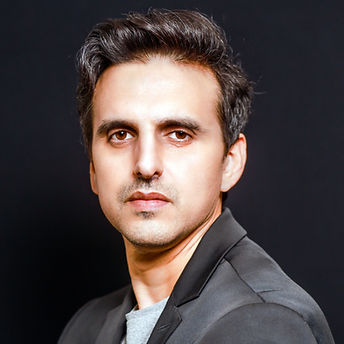
Shay Cohen
Consortium Chairman
Chief Innovation & Corporate Venturing Officer, Managing Director @Tnuva Ventures


Dr. Neta Lavon

Dr. Sarah Hasenson
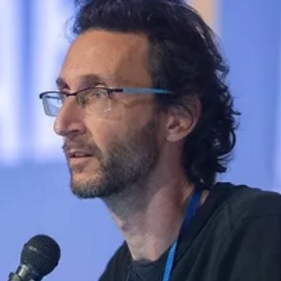
Dr. Iftach Nachman
Consortium Management Member (representing the Academy)
Member of the Consortium Academic Committee.
WP1 Leader.
Biochemistry Molecular Biology, Faculty of Life Sciences, Tel Aviv University.

Prof. Oded Shoseyov
Member of the Consortium Academic Committee
Faculty of Agriculture, Food and Environment
The Hebrew University

Dr. Sharon Schlesinger
Cultivated Meat Consortium Service Center Manager
Faculty of Agriculture, Food and Environment
The Hebrew University


Dr. Roni Rak
Genetic Basis of Proliferation and Differentiation in Cultured Meat Production
Agricultural Research Organization Volcani Institute


Prof. Avi Domb
Center for Nanoscience and Nanotechnology
School of Pharmacy - Institute for Drug Research
The Hebrew University

Prof. Ofra Benny

Prof. Berta Sivan


Shadi Tawil
CSO & CTO of the Consortium Service Center
Faculty of Agriculture, Food and Environment
The Hebrew University

